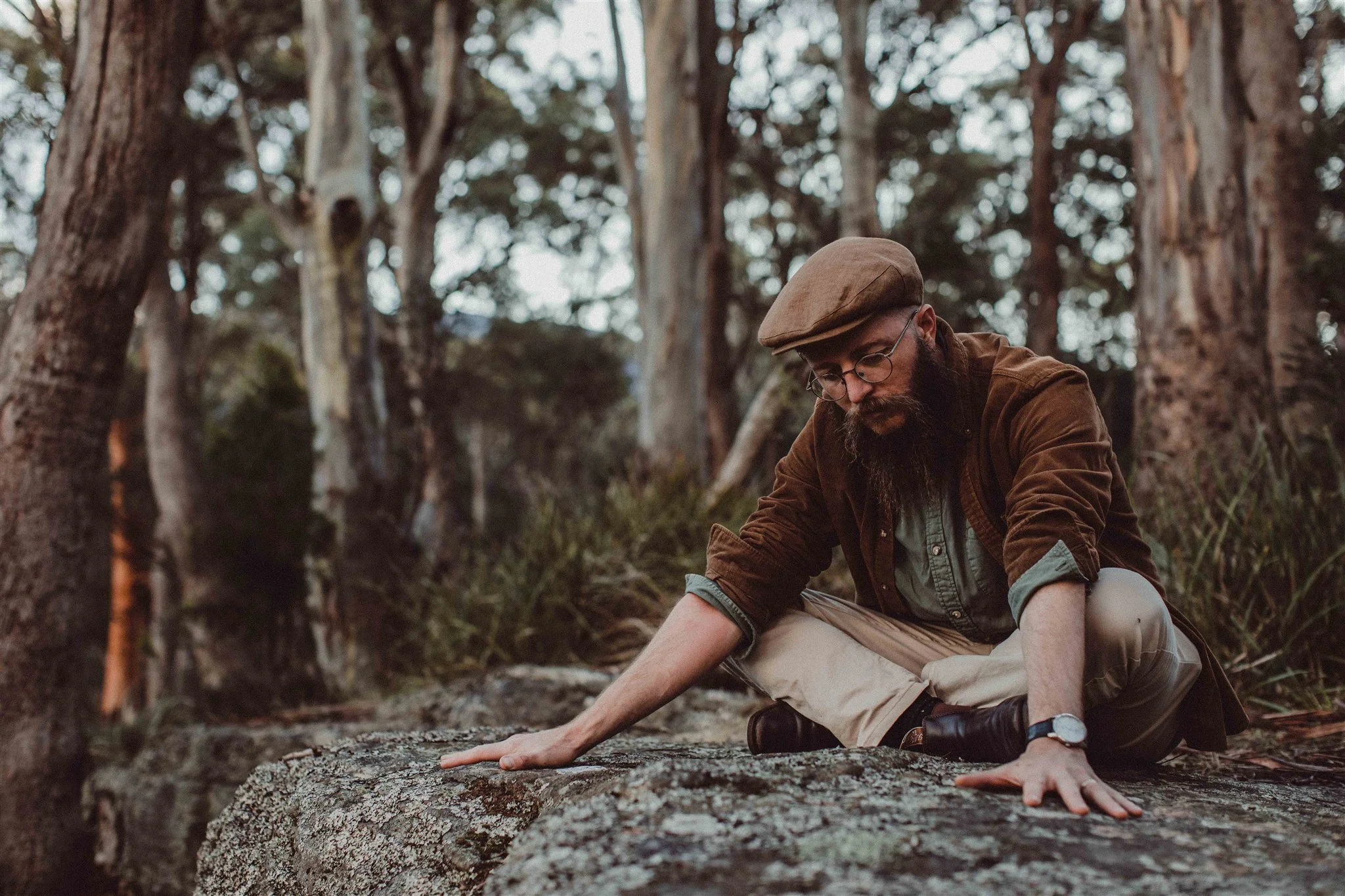
Apprenticeship to Soul
My path into this work has been shaped more by questions than by answers.
In trying to discern a way forward, I have repeatedly encountered the ground shifting beneath me — a slow unravelling of frameworks that once held meaning. In the spaces that opened — in periods of not knowing — I found myself drawn into unfamiliar environments, often without clarity, yet guided by curiosity and a felt sense of what held my attention.
Rather than resolving uncertainty, I began to live more closely alongside it.
An honest relationship with both inner and outer life became sustaining. Over time, a way of being-with emerged — not as a method, but as a practice of attention: staying near to experience as it unfolds.
This orientation continues to shape how I listen, how I move, and how I accompany.
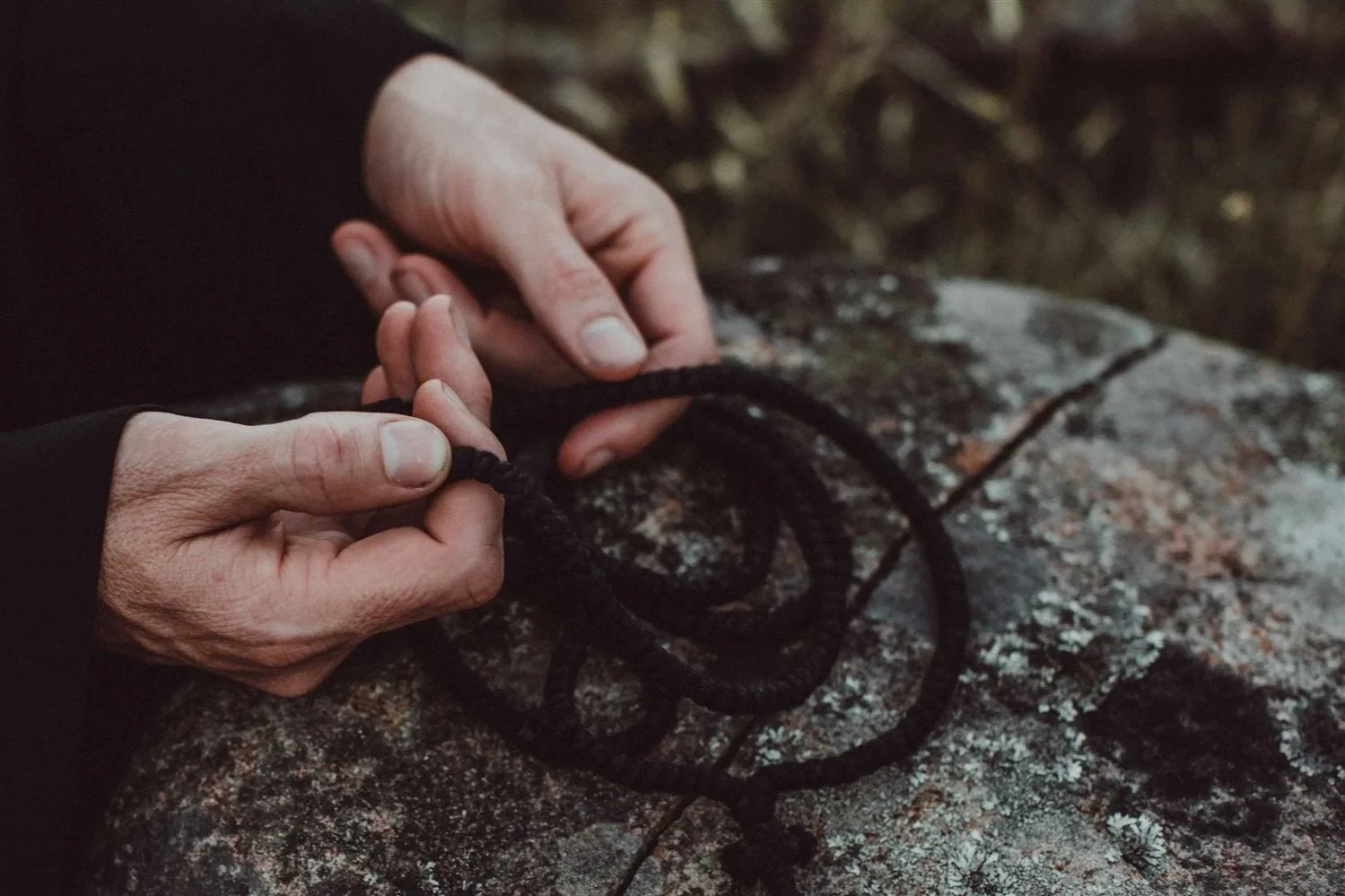
Beginnings
My early life was marked by a sensitivity to my environment and inner life. The environments I moved within did not always feel supportive of what sought to be seen and heard. Difficult experiences in childhood left a lasting imprint but also opened up fissures into which the life in me flowed and mingled with something else.
These inner spaces hosted a rich life of imagination and spirit; seen and understood in solitude and quiet while palpably embraced by the land. I would spend endless hours as a child climbing hillocks and adventuring through their vales, reading beneath trees or sitting cloistered in the bush.
After school I completed a degree with an extended major in philosophy. My church at the time advised that it would lead toward further study and eventual ordination to the priesthood.
Engaging with the Western philosophical tradition gave form to questions that were already alive in me — questions of truth, ways of knowing, and what is of enduring value in life. Yet many of these felt unresolved by the certainties professed by those around me in both church doctrine and academic logic.
I sought language and practice that would resonate with the poetic depth that I felt in life. I was drawn to the experiential theology of Gregory Palamas, the Eastern feeling for ‘mystery’, and the contemplative practice of hesychasm. The hermit found solace in the words of the anonymous The Way of a Pilgrim.
I chose not to continue on my original pathway. Instead, departing belief structures of childhood and family, and the maps laid out before me, I dedicated my life to a lived exploration of the early Christian ‘noetic’ tradition and the prayer of the heart — a contemplative pathway oriented toward direct, participatory encounter with God.
To support this path, I first completed a Graduate Diploma in Education and taught the Study of Religion. Yet a point came where I had to choose between this career and the deeper call within me.
I chose to walk away from teaching and entered monastic life in 2011.
Monastic Formation
I took to monasticism as a duck in water. It was an opportunity like no other, to peel back the layers, to identify sacred threads of being and to be grasped by a process — a living initiation — that saw the slow, often difficult, weaving of a cloth that spoke authentically of me and remained porous to encounter with life, with God, and with creation.
Obedience, fasting, vigil, and unceasing prayer were not just disciplines, but ways of loosening the hold of the thinking mind, standing outside the arc of contemporary rationalism, individualism, and subject-object dualisms.
Obedience was like a Zen koan — not meant simply to be understood; preparing and breaking open the ground so that one might find a truer love and freedom.
And in the twenty-first century, it is still possible to find oneself in a world mostly forgotten and ‘medieval’, yet one that was the common property of humanity for the greater part of its history.
Out of this, a quality of presence took shape — a deep being-with. It was not based in explanation or reasoning, but in a quieting of them and a ‘making space’.
In accompanying pilgrims — in shared silence, shared time — I came to recognize this as a way of being with others in which they could be seen, heard, and perhaps also begin to hear themselves.
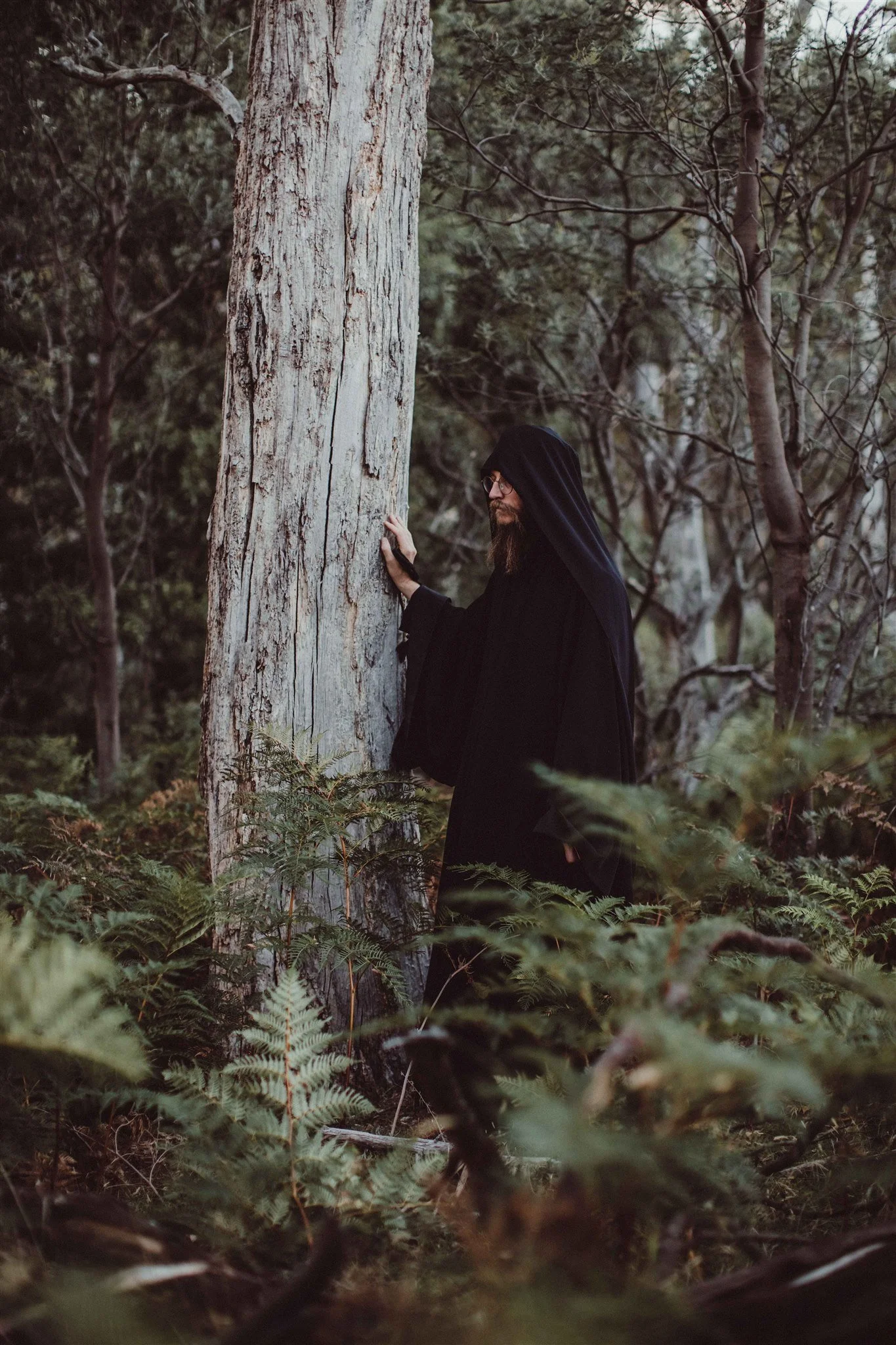
A note on this photograph
This photograph comes from an earlier period of my life in an Eastern Orthodox monastery. Monastic life remains an important part of my formation, but the clothing shown here does not indicate a current affiliation with, or representation of, a religious institution.
Crossing the Threshold
I came to monastic life through a deep sense of commitment — a response to something I experienced as meaningful and true. Yet over time, the same Ariadne-thread that had led me there seemed to draw me onward, beyond the life I had entered.
As a former monk, my experiences still inform who I am and how I meet others, even though I am no longer a member of any religious order and do not hold or present any clerical status or authority.
Images on this website that show me in monastic clothing are traces of a life lived and a testament to its ongoing influence.
Following my departure from monasticism in 2016, I completed a master’s degree in theology. This was a hugely challenging time as I wrestled with stark unknowing and paths leading outside familiar structures of community, belief, and meaning. I travelled; I questioned and listened.
“God is after all the name by which I designate all things which cross my willful path violently and recklessly, all things which thwart my subjective plans, intentions and opinions.”— Carl Jung
New language began to emerge. Psalms, prayers, and old familiar images of the sacred became mute before the unknowing, incapable of holding what sought to be heard.
But the breeze in the trees, the earth beneath my feet remained — quiet, but available.
The quality of presence I learned in monastic life — once shaped within enclosure — gradually turned outward, toward what had been neglected, undeveloped, or forbidden.
Along the way, dreams, imagination and the ‘unconscious’ — once held with suspicion when they moved beyond doctrinal boundaries — became the only living threads that felt available. They asked to be listened to.
These experiences of walking in the borderlands have become central to my work today.
I am particularly drawn to accompanying those who feel the ground shifting beneath them — those estranged from inherited beliefs, navigating loss of meaning, or working through adverse religious experiences and spiritual harm.
“Are you a Protestant, are you a Catholic?” He said, “Don’t ask me these questions... I’m only an old African who finds his God in his dreams.”— Carl Jung, as recalled by Laurens van der Post
Integration
One of the most rewarding things for me in recent years has been working alongside people with disabilities. This work has deeply grounded for me the fact that personal meaning cannot be confined to articulate doctrine, or ableist perspectives. Each person carries their own unique language of expression, relation, and sense of what matters.
My own feelings and experiences are continually shifting and growing.
In Carl Jung’s work, I encountered a model of courageous engagement with the ‘unconscious’ — a willingness to remain with not-knowing, to face what is difficult, and to acknowledge ‘shadow’.
In James Hillman, I found a new language for soul — an imaginal approach that opened myth and image as living reality. Through my ongoing training in Robert Bosnak’s Embodied Imagination®, I am learning new ways of entering into and experiencing this — grounding what might otherwise have remained more conceptual.
Phenomenology has offered another threshold: a way back into older modes of attention, where the world might be encountered as alive and meaningful once again; and where your experience is taken as important and real — all other frameworks set to the side.
Ritual, in many forms, has become a way of articulating what is still emerging. At times this has taken shape through encounters with art and performance — the stark, unsettling aesthetics of Tatsumi Hijikata and Butoh, or the mythic evocation of Heilung.
At other times, it has unfolded through more personal practices, ancestral and nature-based. Blacksmithing has become for me a ritual space — a relationship with matter at once physical, symbolic, and alive; and a conjunction with my interests in spiritual alchemy.
Earth-based spirituality resonates deeply. Creative work, more broadly, has offered a way for images and meanings to take form without needing to be fully explained.
These threads have increasingly come to cohere into a way of working.
Von Franz calls for recovering something of the older sense that matter is ensouled. From the smith’s relationship with an ensouled hammer and the warrior’s named sword, bound up with his fate, to our dependence on modern technology, she suggests that matter asks more of us than technical mastery: it calls for attention, care, and relationship.— Paraphrasing Marie-Louise von Franz
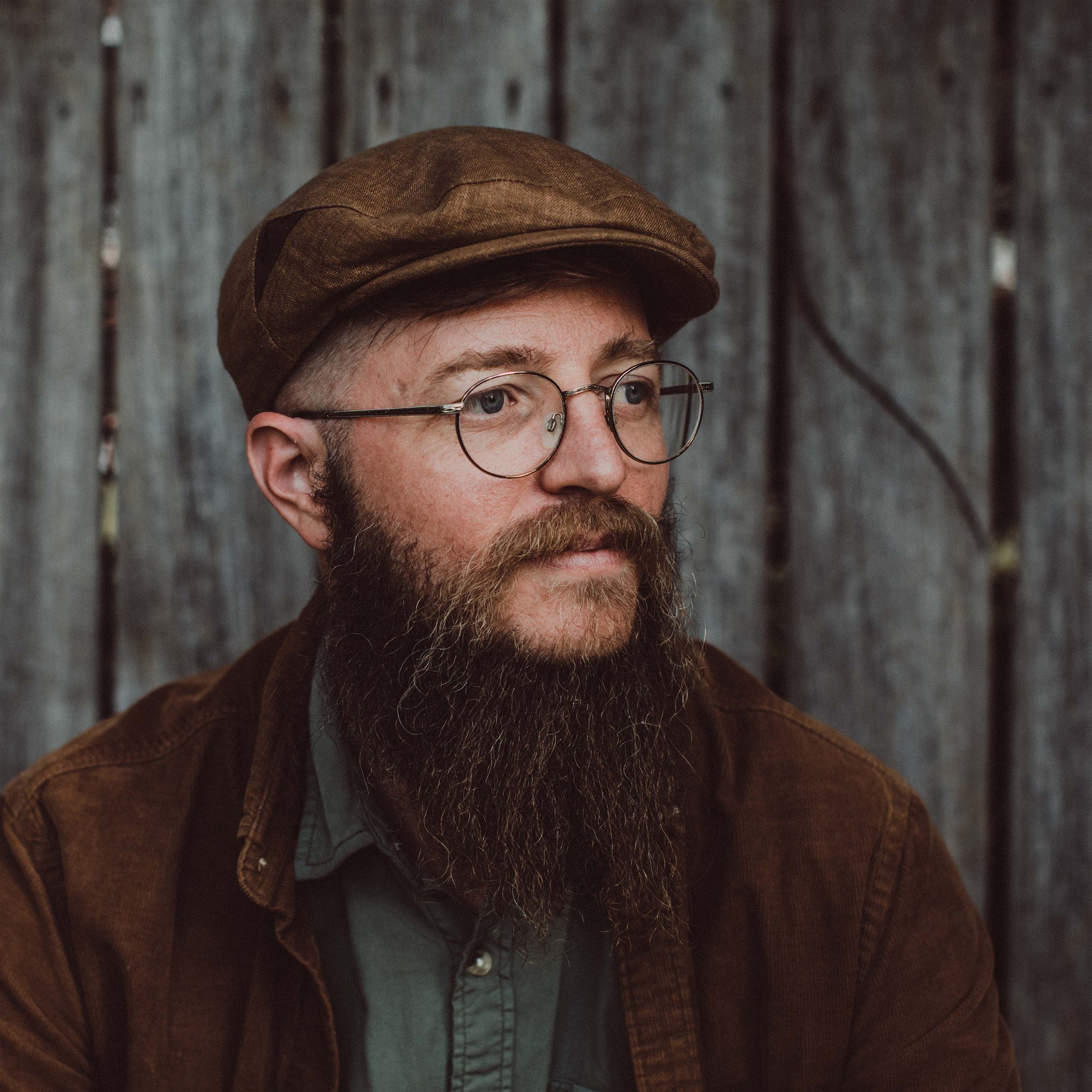
Practice & Life Now
I currently work in a practice of what I call soul accompaniment (sometimes referred to as spiritual direction/accompaniment).
My own life has been woven of many threads, and I am deeply moved by companioning others as they explore the fabric of their own lives.
If I could sum up the impact of my learnings and experiences, it would be to say that they have awoken an intense interest in the different ways people feel in and inhabit the world. The subtle differences, the quiet idiosyncrasies — the things that make each person’s experience their own.
Thomas Moore wrote something in Care of the Soul that speaks to the approach I aspire to:
“Many religious rites begin with washing of the hands or a sprinkling of water to symbolize the cleansing of intention and the washing away of thoughts and purposes. In our soul work we could use rites like these, anything that would cleanse our minds of their well-intentioned heroism.”— Thomas Moore, Care of the Soul
A shared cup of tea. A sigh. Stillness. Sitting with what is difficult without the desire to fix or resolve. Trusting that meaning unfolds in its own time. These small, human gestures remain at the heart of the work.
I currently live on palawa Country in lutruwita / Tasmania with my wife and three children. Our lives unfold under the Western Tiers, known in palawa kani as Kooparoona Niara, which translates to ‘Mountains of the Spirits’. Here, the land, weather, and local community continue to shape my way of being-with.
An Invitation
If you feel drawn to this work, you’re invited to share a little about what’s stirring for you. I’ll read your message with care and respond within a couple of days.